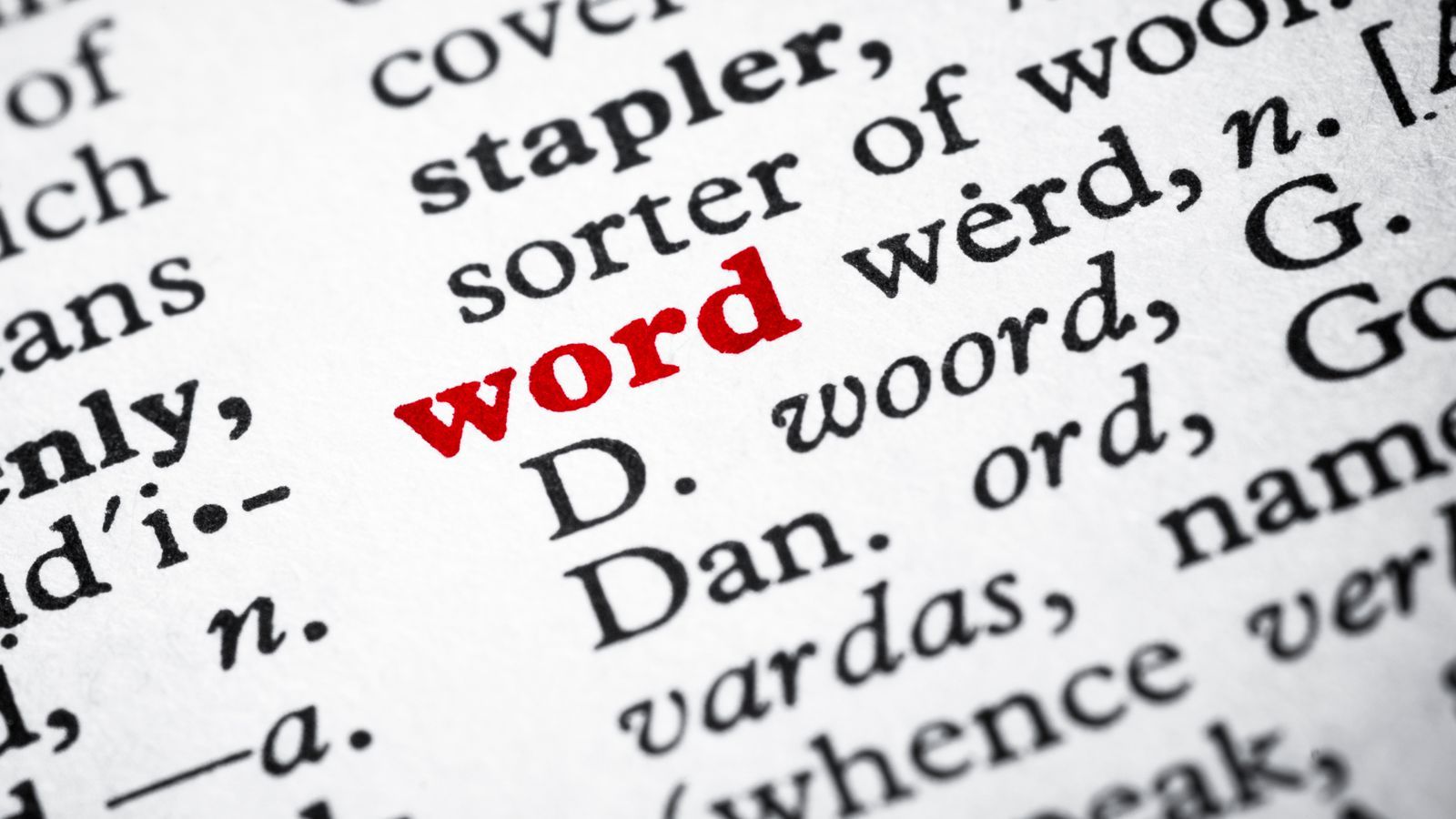
How to Avoid Wordiness: 120 Wordy Phrases and What to Use Instead (Including AI Filler)
Wordy writing wastes your reader's time, and AI tools have made it more common than ever. Here's how to cut the padding without losing your voice, plus a searchable list of 120 phrases to replace.
To avoid wordiness:
- Replace bloated phrases with one word: in order to → to, due to the fact that → because
- Cut redundant pairs: end result → result
- Use direct verbs: make a decision → decide
- Delete filler like very, really, and basically
- Watch for AI-style filler like it's important to note that and delve into
Then compare your word count before and after. Most drafts get noticeably shorter without losing any meaning.
"Vigorous writing is concise. A sentence should contain no unnecessary words, a paragraph no unnecessary sentences."
William Strunk Jr., The Elements of Style
You've read plenty of articles that took far too long to get to the point. Maybe you started skimming. Maybe you closed the tab. Either way, the writer lost you, and it wasn't because their ideas were bad.
Wordiness is a bigger problem now than it used to be. People read on phones, in short bursts, between notifications. And AI writing tools tend to produce text that's smooth, polite, and padded with phrases that sound like they're saying something but aren't.
Cutting extra words isn't about sounding cold or robotic. It's the opposite. Concise writing sounds more confident, more human, and more like you.
The basicsWhat wordiness actually is
Wordiness means using more words than you need to say something clearly. It usually comes from four habits:
- Bloated phrases that take five words to say one: "at this point in time."
- Redundancy that says the same thing twice: "free gift," "end result."
- Buried verbs that hide the action inside a noun: "make a decision" instead of "decide."
- Filler and hedging that softens everything: "I just basically think that…"
Before and after
In today's fast-paced world, it is important to note that the majority of readers are basically skimming. Due to the fact that they have a large number of things competing for their attention, you should make a decision to get to the point in a timely manner in order to keep them reading.
Most readers skim. Lots of things compete for their attention, so get to the point quickly to keep them reading.
Same meaning, 62 percent shorter. Every cut came from the list below.
Myths 1–55 myths about cutting words
1"Longer writing looks more professional."
Phrases like "please be advised" and "at your earliest convenience" sound formal, but they make readers work harder to find the point.
Reality: Clear is professional. Busy people trust writers who respect their time.
2"Concise writing sounds cold."
Cutting filler doesn't mean cutting warmth. A friendly sentence can be short. "Thanks, this helped a lot" is warmer than "I wanted to take a moment to express my sincere appreciation."
Reality: Padding hides your voice. Trimming lets it come through.
3"AI tools will tighten it for me."
Ask an AI tool to "improve" a draft and it often makes it longer, adding transitions, summaries, and phrases like "it's worth noting that." Some will shorten text when asked directly, but they also tend to swap your words for generic ones.
Reality: Check the word count before and after any AI edit. If it went up, look for filler.
4"I need to hit the word count, so a little padding is fine."
Readers and editors notice padding immediately. If you're short, the piece usually needs more substance, not more words.
Reality: Add an example, a step, a number, or a story. Never add "very."
5"Every word I cut is a win."
Over-trimming creates choppy, unclear writing. Transitions like "but," "so," and "for example" help readers follow your thinking.
Reality: Cut words that add nothing. Keep words that add meaning, clarity, or rhythm.
120 wordy phrases and what to use instead
Search the list, or scroll through by category. Use these as suggestions, not strict rules. Read the sentence after each change to make sure it still sounds right.
1Bloated phrases (1–20)
Several words doing the job of one.
| Wordy | Use instead |
|---|---|
| in order to | to |
| due to the fact that | because |
| at this point in time | now |
| in the event that | if |
| for the purpose of | to, for |
| with regard to | about |
| in spite of the fact that | although |
| a large number of | many |
| the majority of | most |
| prior to | before |
| subsequent to | after |
| in close proximity to | near |
| has the ability to | can |
| is able to | can |
| on a daily basis | daily |
| at all times | always |
| in the near future | soon (or give a date) |
| until such time as | until |
| it is possible that | may, might |
| in a timely manner | promptly, on time |
2Redundant pairs (21–40)
One word already says it. The second adds nothing.
| Wordy | Use instead |
|---|---|
| advance planning | planning |
| end result | result |
| free gift | gift |
| past history | history |
| final outcome | outcome |
| future plans | plans |
| basic fundamentals | fundamentals |
| each and every | each |
| first and foremost | first |
| unexpected surprise | surprise |
| true facts | facts |
| added bonus | bonus |
| repeat again | repeat |
| return back | return |
| join together | join |
| collaborate together | collaborate |
| new innovation | innovation |
| completely finished | finished |
| brief summary | summary |
| close proximity | proximity, near |
3Buried verbs (41–60)
A weak verb plus a noun hiding the real action.
| Wordy | Use instead |
|---|---|
| make a decision | decide |
| give consideration to | consider |
| conduct an analysis of | analyze |
| provide assistance to | help |
| make an improvement to | improve |
| come to a conclusion | conclude |
| take action | act |
| have a discussion about | discuss |
| perform a review of | review |
| reach an agreement | agree |
| make an attempt to | try to |
| give an explanation of | explain |
| make a recommendation | recommend |
| offer a suggestion | suggest |
| carry out an investigation | investigate |
| is in need of | needs |
| have an impact on | affect |
| make use of | use |
| place emphasis on | emphasize |
| be in agreement with | agree with |
4Filler and hedges (61–80)
Words that soften, stall, or pad. Usually safe to delete.
| Wordy | Use instead |
|---|---|
| very | (delete, or use a stronger word: very tired → exhausted) |
| really | (delete) |
| basically | (delete) |
| actually | (delete unless correcting something) |
| just | (delete in most cases) |
| quite | (delete) |
| literally | (delete unless you mean it literally) |
| totally | (delete) |
| definitely | (delete) |
| kind of, sort of | (delete, or be specific) |
| I think that | (delete; it's your writing) |
| I feel that | (delete) |
| it seems that | (delete, or state it) |
| needless to say | (delete; then don't say it) |
| for all intents and purposes | effectively (or delete) |
| the fact that | (reword: the fact that she left → her leaving) |
| there are many writers who | many writers |
| it is important that you | (reword: save your work) |
| what I mean is | (delete) |
| in my own personal opinion | in my opinion (or delete) |
5Business and email jargon (81–100)
Formal-sounding words that slow readers down.
| Wordy | Use instead |
|---|---|
| utilize | use |
| leverage | use |
| facilitate | help, run |
| commence | start |
| endeavor | try |
| ascertain | find out |
| in terms of | about (or reword) |
| going forward | from now on (or delete) |
| circle back | follow up |
| reach out to | contact, email |
| touch base | talk, check in |
| per our conversation | as we discussed |
| please be advised that | (delete) |
| please do not hesitate to contact me | please contact me |
| I am writing to inform you that | (delete; start with the news) |
| at your earliest convenience | by [date] |
| as per | per, as |
| kindly | please |
| take into consideration | consider |
| moving forward | next (or delete) |
6AI-style filler (101–120)
Phrases AI tools overuse. They make human writing sound generated too.
| Wordy | Use instead |
|---|---|
| In today's fast-paced world, | (delete; start with your point) |
| It's important to note that | (delete) |
| It's worth mentioning that | (delete) |
| delve into | look at, explore |
| navigate the complexities of | handle, deal with |
| plays a crucial role in | matters for, affects |
| is a testament to | shows |
| in the realm of | in |
| unlock the potential of | improve, use |
| a wide array of | many |
| seamlessly integrates with | works with |
| embark on a journey | start |
| In conclusion, | (delete; just conclude) |
| at the end of the day | ultimately (or delete) |
| elevate your | improve your |
| harness the power of | use |
| whether you're a beginner or a seasoned pro | (delete, or name your reader) |
| stands as | is |
| serves as | is |
| the ever-evolving landscape of | the changing field of (or be specific) |
A 5-step trimming method
- Count first. Paste your draft into How Many Words and note the word count.
- Cut the opening. Many drafts start with a warm-up paragraph. Delete it and see if the piece still works.
- Search for the usual suspects. Use your editor's find tool for "very," "really," "in order to," "that," and "it is."
- Free the buried verbs. Look for "make," "give," "have," and "take" followed by a noun.
- Count again. Compare the two numbers. Read the shorter version out loud to make sure it still sounds like you.
When to keep the extra words
Concise doesn't always mean shortest. Keep a word or phrase when:
- Removing it breaks the grammar or makes the sentence unclear.
- It carries meaning. "Completely destroyed" is redundant, but "partly destroyed" isn't.
- It sets the tone. A personal note, a thank-you, or a sensitive email may need some softening.
- It helps rhythm. Fiction, speeches, and poetry often use repetition on purpose.
- Your readers need it. Readers in a second language may need a little more explanation, not less.
Respect your reader's time
Every unnecessary word asks your reader for a little more attention. On a phone, in a busy inbox, or in a feed full of AI-generated text, that attention is precious.
You don't need to memorize all 120 phrases. Start with the five that show up most in your own writing, and cut them every time you edit. Your writing will get shorter, clearer, and more like you.
See how many words you cut
Paste your draft into one tab and your edit into another, and compare the counts side by side.
Try How Many WordsFrequently asked questions
What is wordiness in writing?
Wordiness means using more words than you need to express an idea clearly, through bloated phrases, redundant pairs, buried verbs, or filler words like "very" and "basically."
How do I make my writing less wordy?
Replace long phrases with single words, cut redundant pairs, turn noun phrases back into verbs, and delete filler. Check your word count before and after editing, then read the result out loud.
What should I say instead of "in order to"?
Usually just "to." For example, "We met in order to plan the launch" becomes "We met to plan the launch."
What words make writing sound like AI?
Common examples include "delve into," "it's important to note that," "a testament to," "navigate the complexities of," "in the realm of," and "in today's fast-paced world." Replacing them with plain, specific words makes writing sound more human.
Is concise writing always better?
Usually, but not always. Keep words that add meaning, clarity, tone, or rhythm, especially in personal messages, fiction, and writing for second-language readers.